Why Puzzle Games Can Be Good for Your Health
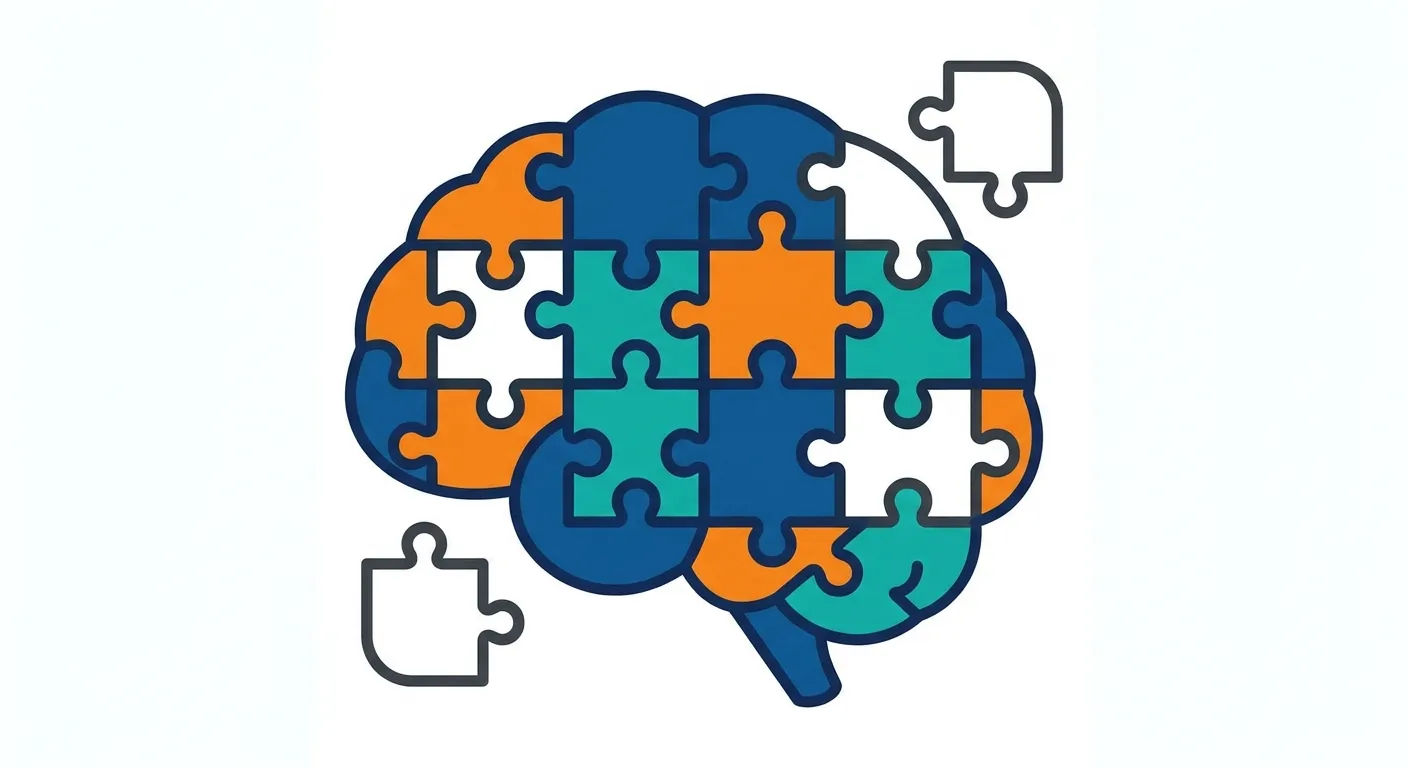
Puzzle games feel like a small break in the day, but they are not completely passive entertainment. A logic grid asks you to hold rules in mind. A word ladder makes you search your vocabulary while tracking letter changes. A connection puzzle asks you to ignore tempting wrong answers and look for a stronger pattern.
Those are real mental tasks. The important question is what they mean for your health.
The honest answer is encouraging, but more modest than many “brain training” advertisements suggest: puzzles can be a useful form of cognitive engagement, and research has connected mentally stimulating activities with better performance in areas such as attention, working memory, and processing speed. That does not mean an ordinary daily puzzle has been proven to prevent dementia or make someone broadly smarter.
Puzzles make you actively use several thinking skills
Different puzzles place different demands on the mind. Depending on the game, you may be using:
- Working memory to keep clues and possibilities available while you solve.
- Attention to focus on relevant details and ignore distractions.
- Processing speed to recognize useful information efficiently.
- Cognitive flexibility to abandon an approach that is not working and try another.
- Problem-solving to break a larger challenge into smaller deductions.
This is one reason variety matters. Repeating the same familiar task can make you very good at that task, but switching among logic, word, spatial, and pattern puzzles asks your mind to work in different ways.
Recent research is promising—but specific
In February 2026, Johns Hopkins Medicine reported long-term results from the NIH-funded ACTIVE study. Adults 65 and older who completed a particular kind of adaptive, computer-based speed-of-processing training, including later booster sessions, had a lower incidence of dementia over a follow-up period of up to 20 years. The boosted speed-training group was the only training group in that study with a statistically significant difference from the control group.
That is noteworthy, but it should not be stretched into the claim that every crossword, logic grid, or puzzle app produces the same result. The intervention was structured, adaptive cognitive training—not simply recreational puzzle play.
Other research looks at everyday mentally stimulating activities. A 2024 Texas A&M University study followed older adults with mild cognitive impairment and found that people reporting higher participation in activities such as games, reading, and hobbies also showed higher levels of memory, attention, working memory, and processing speed during the study period. Because this was an observational study, it shows an association rather than proving that the activities caused the difference.
A 2023 University of York study similarly reported that older adults who played digital puzzle games performed better on working-memory tasks and were better able to ignore distractions. Again, the finding is interesting, but it does not turn a casual game into a medical treatment.
The bigger health picture matters
The World Health Organization’s updated 2026 guidance on reducing the risk of cognitive decline and dementia includes cognitive training, cognitive stimulation, and social activity among the approaches considered. It also places brain health inside a much wider picture that includes physical activity, cardiovascular and metabolic health, smoking, alcohol, diet, social isolation, and environmental risks.
That context is important. A daily puzzle can be one healthy part of a day, but it does not replace movement, sleep, medical care, social connection, or a balanced diet.
The U.S. National Institute on Aging makes a similar distinction. It notes associations between mentally stimulating activities and lower risk of cognitive impairment, while warning that commercially available brain-training games have not all been shown to deliver the same effects as controlled clinical programs.
Puzzles can also be a useful pause
Health is not only about long-term cognitive performance. A short puzzle can provide a defined period of focus—a few minutes when notifications, work, and the rest of the day move into the background.
That does not guarantee stress relief for everyone. A difficult timed puzzle can be frustrating, and research using objectively tracked playtime suggests that the context and quality of play matter more than raw playtime when discussing gaming and well-being. The healthiest version is usually the one that feels engaging rather than compulsive: play because the challenge is satisfying, stop when it is not, and do not sacrifice sleep or movement for a streak.
A reasonable way to use puzzle games
You do not need a complicated brain-training schedule. A practical approach is to:
- Choose puzzles you genuinely enjoy.
- Mix different kinds of challenges instead of repeating only one task.
- Let the difficulty rise gradually without turning every session into a test.
- Play alongside an otherwise healthy routine.
- Treat puzzles as recreation and mental engagement—not medicine.
The best reason to play a puzzle is still the simplest one: solving it feels good. If that enjoyable habit also keeps you curious, focused, and mentally active, that is a worthwhile bonus.
Sources and further reading
- World Health Organization: Risk reduction of cognitive decline and dementia, second edition (2026)
- Johns Hopkins Medicine: Cognitive speed training linked to lower dementia incidence up to 20 years later (2026)
- Associated Press: Challenging your brain helps keep it healthy. Here’s how to do it (2026)
- Texas A&M University: Games, puzzles and reading can slow cognitive decline in the elderly (2024)
- University of York: Digital puzzle games could be good for memory in older adults (2023)
- National Institute on Aging: Preventing Alzheimer’s disease—what do we know?
- Technology, Mind, and Behavior: Objectively tracked video game playtime and well-being (2024)
This article is for general information and is not medical advice.